
Water spots ruining your car’s perfect finish? That protective film is supposed to make water bead up and roll away, but does it really work? I’ll show you an easy way to check.
Testing PPF hydrophobicity is about seeing how water acts on its surface. You can use a simple spray bottle to check the water beading. Or, for a better demonstration, you can use a special testing machine that shows the effect very clearly on different film samples.
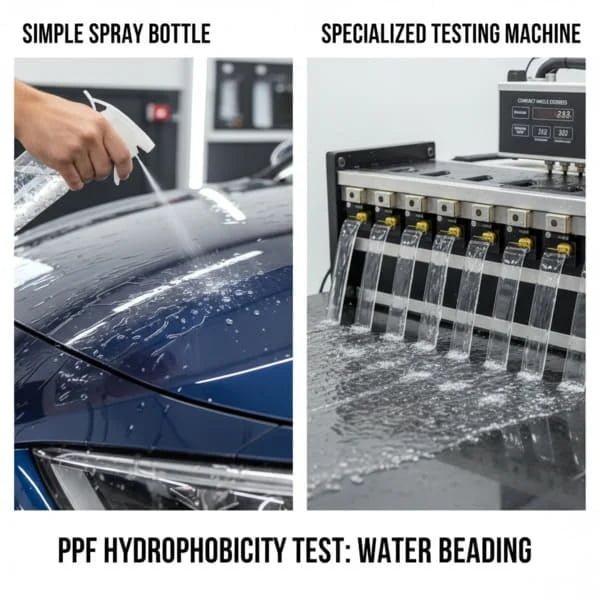
This water-repelling quality is a huge benefit of good PPF. It makes cleaning so much easier. But before we get into the details of testing, we should cover a basic question first. Understanding the fundamentals helps you know what to look for. So, let’s start from the beginning.
Is PPF hydrophobic?
You spent good money on premium protection for your car. But you might wonder if all PPF really repels water like the ads say. Let’s talk about whether this water-beading feature is standard.
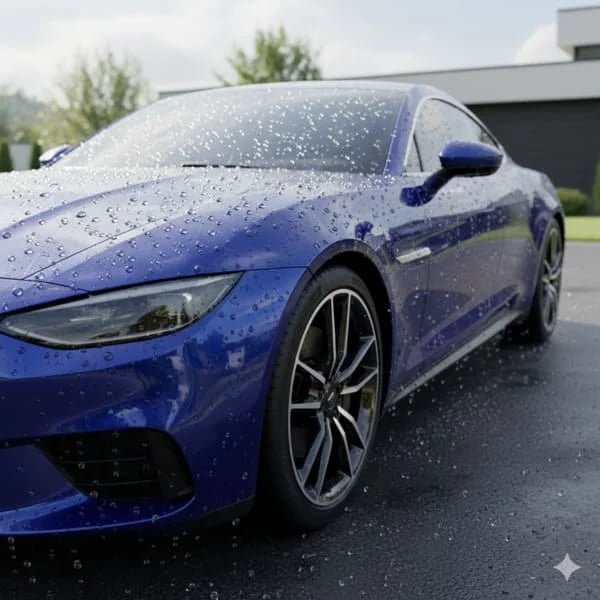
Yes, good quality Paint Protection Film (PPF) is made to be hydrophobic. This ability comes from a special top layer. This layer makes water form into little balls and roll right off the car. It helps keep the car clean. But not all films work the same.
What Makes PPF Water-Repellent?
Hydrophobic simply means “water-fearing.” On a molecular level, the top coat of quality PPF is engineered to have very low surface energy. Think of it like a freshly waxed pan; water and oil don’t want to stick to it. When water lands on this surface, it stays balled up in tight, round beads instead of spreading out flat. This is what we call a high contact angle. This property is not just for looks. It creates a self-cleaning effect, as the water beads pick up dirt and dust as they roll off the vehicle. I remember working on a client’s black sports car, and the difference was night and day. Before PPF, it was a magnet for dust and water spots. After we applied a quality hydrophobic film, he told me he barely had to wash it anymore. The rain did most of the work for him. This is the practical magic of a good hydrophobic top coat.
| Feature | Low-Quality PPF | High-Quality Hydrophobic PPF |
|---|---|---|
| Top Coat | Basic or none | Advanced, low surface energy |
| Water Behavior | Spreads out, leaves spots | Forms tight beads, rolls off |
| Self-Cleaning | Minimal | Excellent |
| Maintenance | Harder to clean | Easier to maintain |
How can you test for hydrophobicity?
You read the product claims, but you want to see the proof for yourself. How can you be sure the film you are using is actually hydrophobic? I will show you a couple of ways to test it.
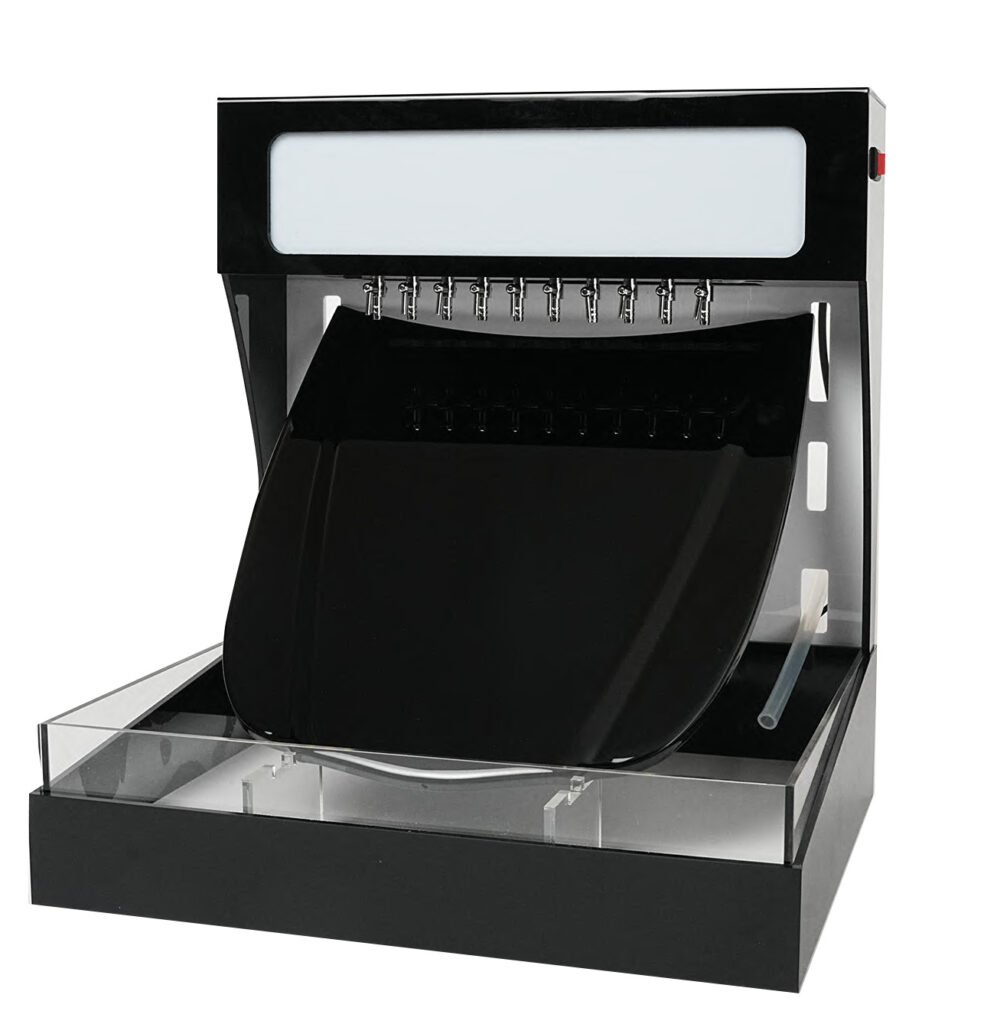
The easiest way is a simple spray bottle test to see if water beads up and rolls off quickly. For a much clearer and more professional test, you can use a hydrophobicity testing machine. This allows you to apply different films and compare the water-repelling effects side-by-side.
Simple vs. Advanced Testing Methods
The simplest way to check for hydrophobicity is with a bottle of water. I do this all the time for a quick check. Just spray the surface and watch. Are the water droplets sitting like tall, round beads? Or are they flatter and spread out? When you tilt the surface, do the beads roll off easily without leaving a trail? If the answers are yes, you have a good hydrophobic film. However, this method can be subjective. It’s hard to compare two different films accurately with just your eyes. That’s where a professional testing machine comes in. I recently got one for our shop, and it’s a game-changer. It is a small device with a surface where you can place samples of different PPF brands. It then simulates rain. You can see, right next to each other, how each film performs. One film might let water sheet off, while another makes it bead up perfectly. It shows the effect directly and makes it very easy to demonstrate the quality difference to customers.
Conclusion
Testing PPF hydrophobicity can be simple, from a basic spray test to using a machine. A quality film will make water bead and roll off, making maintenance easier.